

RECYCLING & CIRCULARITY
From used plastic to new value.
Recycling is one of the key ways to keep plastic in use and out of nature. When plastic is designed, collected, sorted and processed correctly, it can become material for new products.
RECYCLING DOES NOT BEGIN AT THE BIN
It starts with the way a product
is designed
It begins with the material it uses and whether it can be collected, sorted and processed after use.
A circular system looks beyond the first life of a product. It asks what happens next.
How plastic recycling works
Collection
Used plastic first needs to enter an organised collection system.
Sorting
Different plastic types are separated so they can follow the right recycling pathway.
Cleaning & preparation
Collected material is cleaned and prepared for processing.
Recycling
The material is processed through the appropriate recycling technology.
A new material
Recycled plastic can become raw material for new products.
Who is responsible for making it work?
Everyone has a role: producers adapt packaging, retailers provide return points, public authorities oversee the system, recyclers process the material and consumers return eligible containers.
Different technologies. Different roles.
Mechanical, chemical and recycled plastic each play a different part in the system.
Mechanical recycling
Mechanical recycling is currently the most established form of plastic recycling. Used plastic is sorted, cleaned and physically processed — for example by shredding, melting and reforming — into recycled material that can be used again.
Chemical recycling
Chemical recycling breaks plastic down into smaller chemical components that can potentially be used to produce new materials. It may complement mechanical recycling in certain applications, but it is still less widely used, can be more costly and energy intensive, and requires further development and research before it can operate at comparable scale.
Recycled plastic
Material that has already been used, collected and processed can become raw material again, provided it meets the necessary technical, quality and safety requirements.

Of global plastic waste, a low percentage was ultimately recycled in 2019, after recycling losses..
19% was incinerated and
almost 50% went to sanitary landfills.
CIRCULARITY IS BIGGER THAN RECYCLING
A circular economy is built around keeping products and materials in use for as long as possible instead of following a linear take–make–use–discard model.
-
Reduce what is unnecessary.
-
Reuse where systems genuinely support it.
-
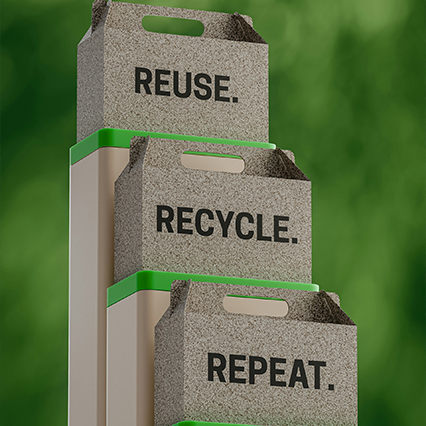
Recycle used material into new resources.
-
Replace materials or solutions where another option delivers a better overall outcome.
Everyone has a role in keeping plastic in the loop.
Recycling works when the whole system works.
Companies
Design for recyclability, reduce unnecessary material, use recycled content and invest in better collection and recycling systems.
Systems & Policymakers
Build the infrastructure, standards and collection schemes that allow recycling to work consistently and at scale.
Consumers
Follow local sorting instructions, return deposit packaging where systems exist, keep recyclable materials in the correct stream and never leave plastic in nature.